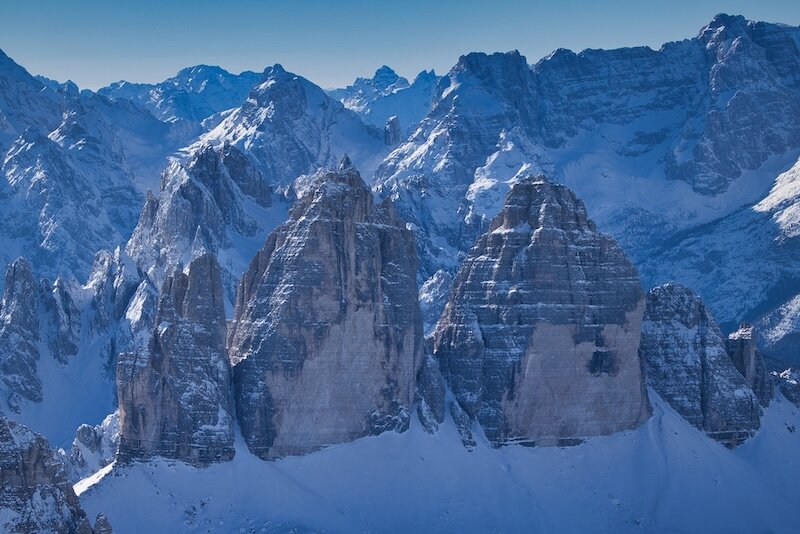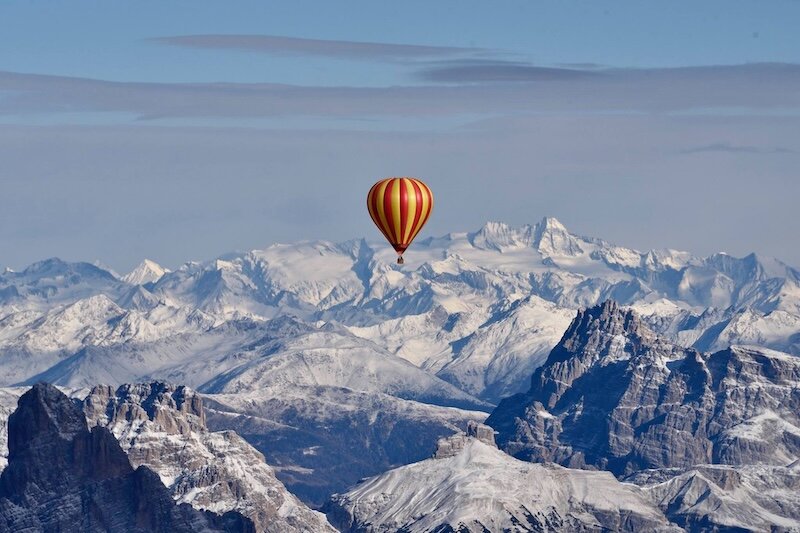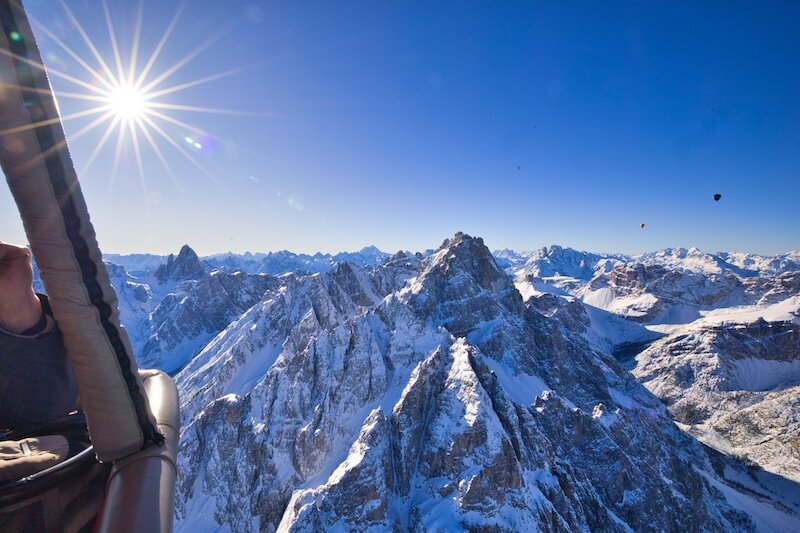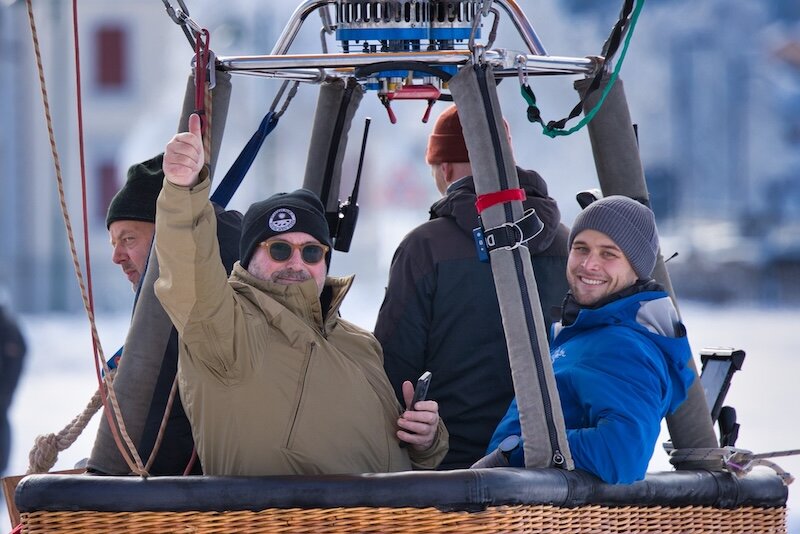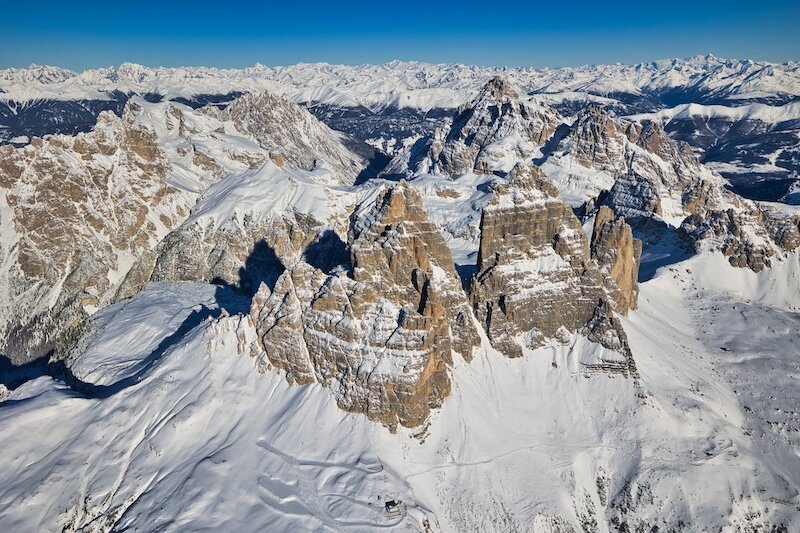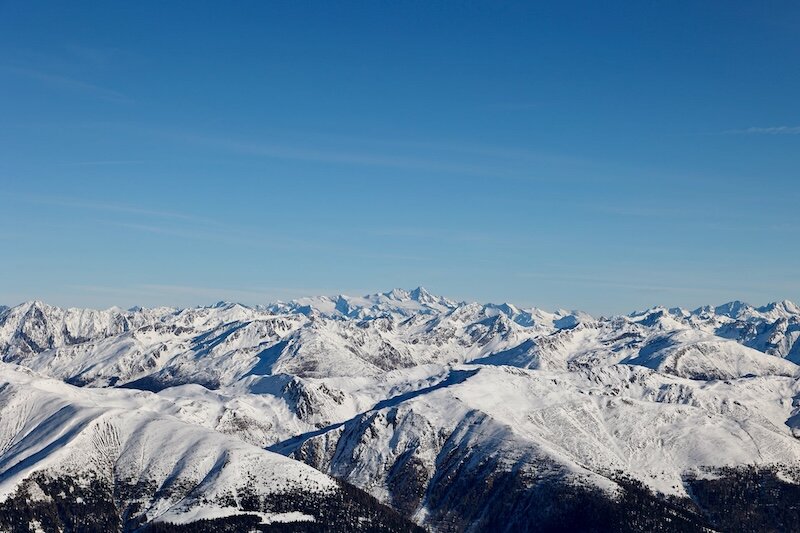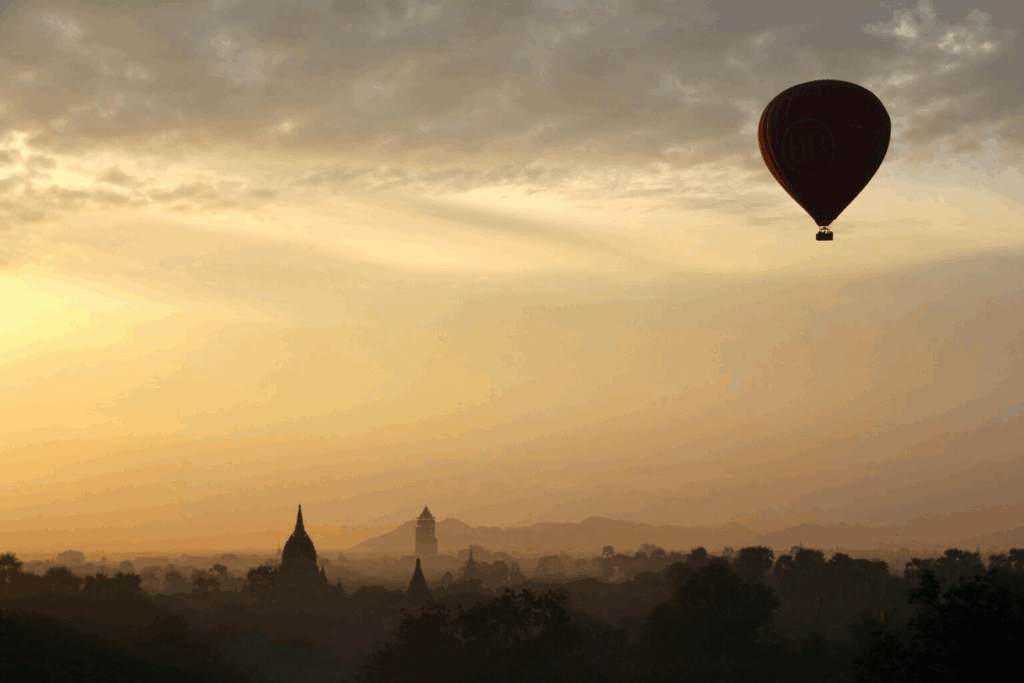
At the beginning of January this year, we had a great opportunity to take our balloons to the Alps and conduct a couple of breathtaking flights there. The Dolomites offer amazing views and landscapes, but at the same time they represent a rather demanding terrain for hot air balloon flights.
Flying over different mountain ranges is not the same
The Alps, thanks to the fact that they cover a really large area, allow us to fly in basically any direction, which distinguishes them from many other mountain ranges.
Even if the wind in the Alps blows in an unfavorable direction, we can always change the take-off location to adapt to the given wind direction and thus provide ourselves with suitable potential landing sites.
For example, the Tatra Mountains – located in southern Poland, can only be crossed from south to north or from north to south. This usually means waiting for the right wind, which makes it difficult to find favorable conditions. Our colleagues from the Polish DreamBalloon branch, having traveled all over Poland, have tried several times to fly over Mount Tatra, but each time, despite beautiful weather, there was no suitable wind.
The views and the landing
The most spectacular are the flights over the highest and/or rockiest parts of the mountains. We flew over the Dolomites. In that area there are often weather conditions that allow pilots to take off in the middle of the mountains, while landing, for example, in the warm climate zone of Italy! For example, after taking off within the much colder mountain area, we landed near warmer Venice.
For slightly shorter flights, the pilot can choose one of the many large valleys between the peaks of the Alps as a landing site, such as the Belluno Valley, which we also happened to choose as one of our landing sites.
Difficulties and preparations
No matter how long you plan to fly or the distance you cover, you need to take into account the need to reach a suitable altitude – above 12 000 feet (about 3.7 km). This implies certain equipment requirements. For example, during each flight we are equipped with an oxygen breathing system (oxygen mask + cylinder).
The balloon also undergoes various preparations – the pressure in the cylinders is increased with nitrogen; we provide a sufficient amount of gas, which should be enough for the planned time/distance, and a little more. For this reason, the number of passengers is reduced accordingly – to be able to carry more gas and reduce the weight of the envelope.
What is the difference between such a flight and an (extra)ordinary passenger flight in our regular flying regions in Sweden?
Firstly, the flights in the Alps are scheduled to last at least 4 hours. There are no stopovers during this time, and you fly over the highest mountain peaks, so it’s more of an adventure for lovers of long flights with strong nerves.
12,000 feet above the Alps in January, 4 hours in the fresh air – how do we deal with such temperatures?
Contrary to what may seem like an obvious conclusion, pilots and passengers do not turn into ice cubes during the flight 😊
For example, the temperature at the start down at the ground was -5 degrees Celsius. On the other hand, at an altitude of 4,000 meters where we spent almost 4 hours, it was -20 degrees.
However, it is important to remember that the sun is very strong at the top, which obviously affects the perceived temperature. Moreover, when we stand on the ground we feel the wind, but when we fly with its speed and direction – we do not.
For this reason, if we fly over a peak where people are standing, they will be much colder than us, because they are affected by the wind, which we do not feel as much.
Are such flights dangerous?
Flying over high mountain ranges naturally requires much more preparation, piloting experience, but also humility. However, if we are careful and carry out the flight “according to the art”, we still consider it a relatively safe adventure.
Pilots conducting such flights must demonstrate experience, appropriate knowledge, but also a good amount of self-control. The varying topography of the mountains can create unique flying conditions, even those such as turbulence.
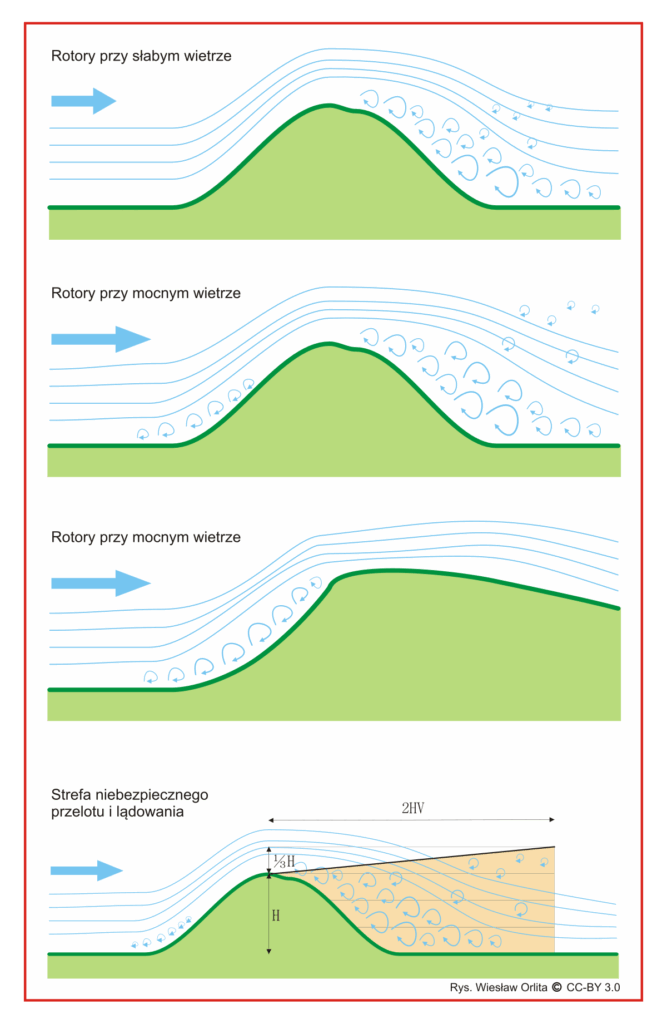
Turbulence in an airplane and in a balloon are two completely different experiences. In the mountains, turbulence can occur when we are flying at high speed and a high mountain section ends below us. In such a situation, when the wind slows down significantly, the air, instead of continuing to fly straight, “folds”.
When we are in a balloon under turbulence, we feel the wind from all sides. The balloon starts to rock and can “swing” up to 30 degrees to each side. Then, as the flight altitude begins to decrease, the pilot tries to heat the air in the envelope with the burners, although at first it may seem that the balloon is not heating up at all (in fact, it heats up much more slowly), as it is quickly cooled by the many air currents within which it is located. It is in such situations that the pilot must show self-control.
Below is a picture showing how the air can behave after the end of a high mountain range:
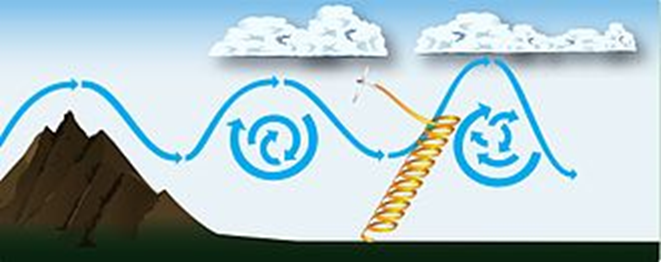
Below is a diagram of the rotor formation, also with the dangerous landing area specified:
Nevertheless, these are situations that pilots are trained to handle 😊
To summarize…
Flights in the Alps are incredibly beautiful – from above we saw the Adriatic Sea, Venice, the Croatian coast, Slovenia and part of Italy. These flights had almost unlimited visibility.
The crew following the balloon also has plenty of attractions – they follow the balloon not on highways, like most travelers from point A to point B in this region, but through narrow mountain paths, sometimes passing almost through the peaks.
For those of you who are looking for something more exciting to fly, we sincerely recommend a balloon adventure over the Alps.