1. sheep, duck and a rooster on board
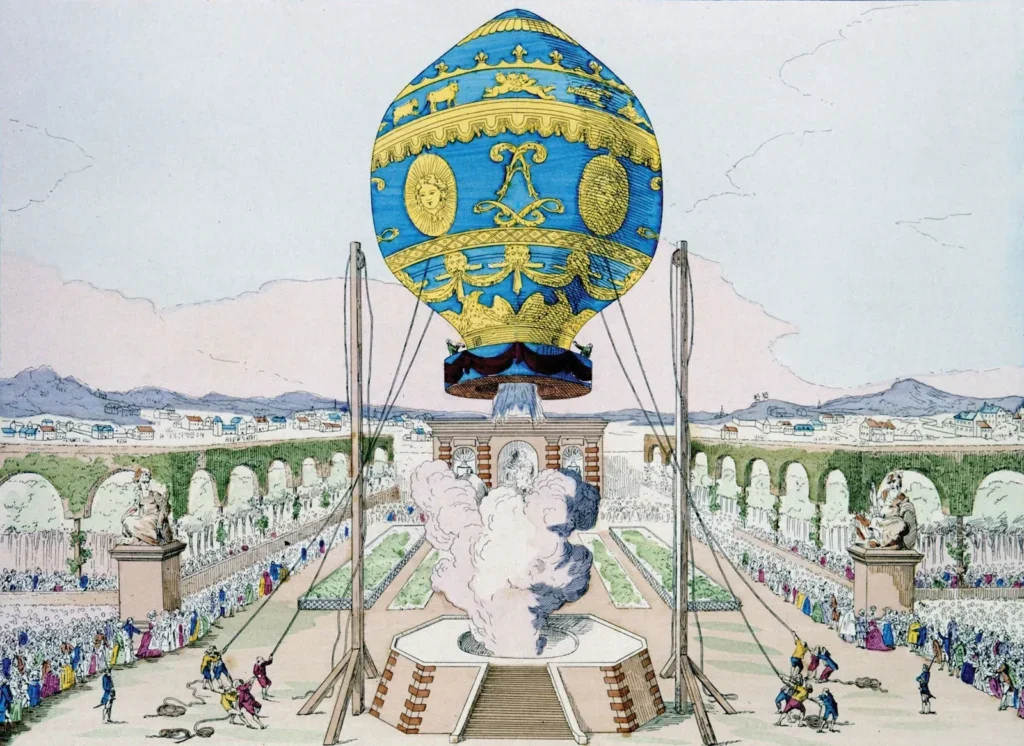
Hot air balloons were invented in France in 1783 by brothers Joseph and Étienne Montgolfier. The brothers organized a demonstration in front of Louis XVI and the royal family in the courtyard of the castle. The passengers on the first test flight were a sheep, a duck and a rooster.
The balloon rose to about 600 meters, but the flight did not last long. Due to a hole in the envelope, the balloon landed after a short time in the Vaucresson forest. Fortunately, the animals were not harmed and were later hailed as heroes and lived in the grounds of the royal palace for the rest of their lives.
2. Military balloons
Hot air balloons were once used for military purposes such as reconnaissance and observation.
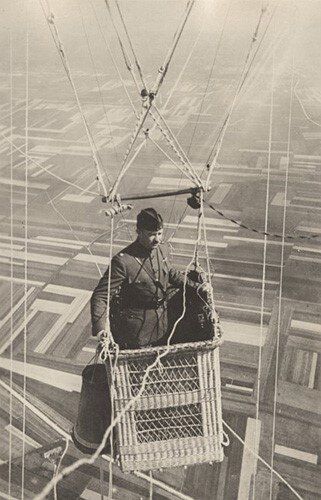
There are many examples of the use of hot air balloons, especially since the First World War when military balloons were used by both sides in the conflict. They were used to observe enemy movements while remaining out of range of ground fire.
Pictured: An American major in the basket of an observation/reconnaissance balloon flying over territory near the front line in France.Many may wonder whether it was safe for pilots to handle hot air balloons, given that the balloons and their fabric envelopes were not comparable to more traditional military aircraft equipment. It is a very legitimate question.
Balloons were actually attacked and set on fire, so in dangerous situations and when the balloon could no longer fulfill its function, the pilots evacuated using parachutes.
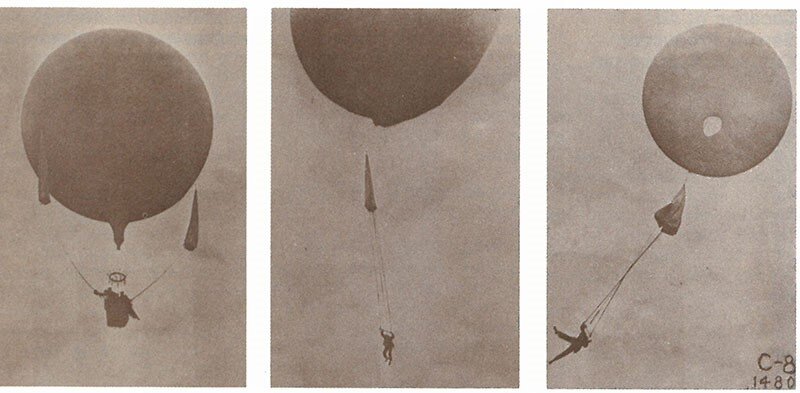
Evacuation from an observation balloon with parachute
3. Historical military balloon forces
Military balloon forces were present in several countries!
In Sweden, military balloons began to appear in the air towards the end of the 19th century when the first Swedish military balloon took to the sky in 1898. Both free and tethered balloons were used in the Swedish defense until 1936 when the last military flight was performed. Read more: https://www.avrosys.nu/aircraft/Ballong/indexballong.htm
Given that DreamBalloon also operates in Denmark and Poland, these two countries also had their own military hot air balloon forces!
In the fall of 1917, the first Polish balloon unit was formed! However, it was not until after the liberation of Greater Poland that two fabric envelopes, which were part of observation balloons, and several hundred hydrogen cylinders were found in a hangar in Poznań.
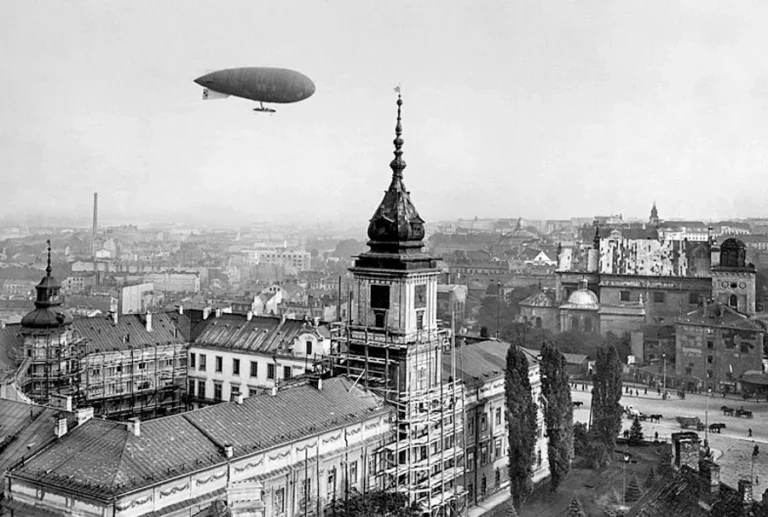
The airship “Lech” flies over Warsaw.
The first observation balloon flight took place on July 23, 1919. The Polish Army bought more balloon equipment from France, where military balloons were already widely used, and this led to the development of the Polish Air Forces. In addition to their development in the interwar period, balloons were also used during the Second World War. By 1 September 1939, the Polish Army had mobilized 12 balloon companies.
In Denmark, the 100-year-old balloon hangar at Islands Brygge in Copenhagen is one of the only remaining ones of its kind in Europe. It is now a heritage building that bears witness to a very special era in Danish military history.
The balloon hangar, which is worth a visit, was built in 1917. The brain behind the practical and functional wooden building was not an architect, but Captain Gottschalk from something as exciting as the army balloon service.
4. The world’s largest balloon festival
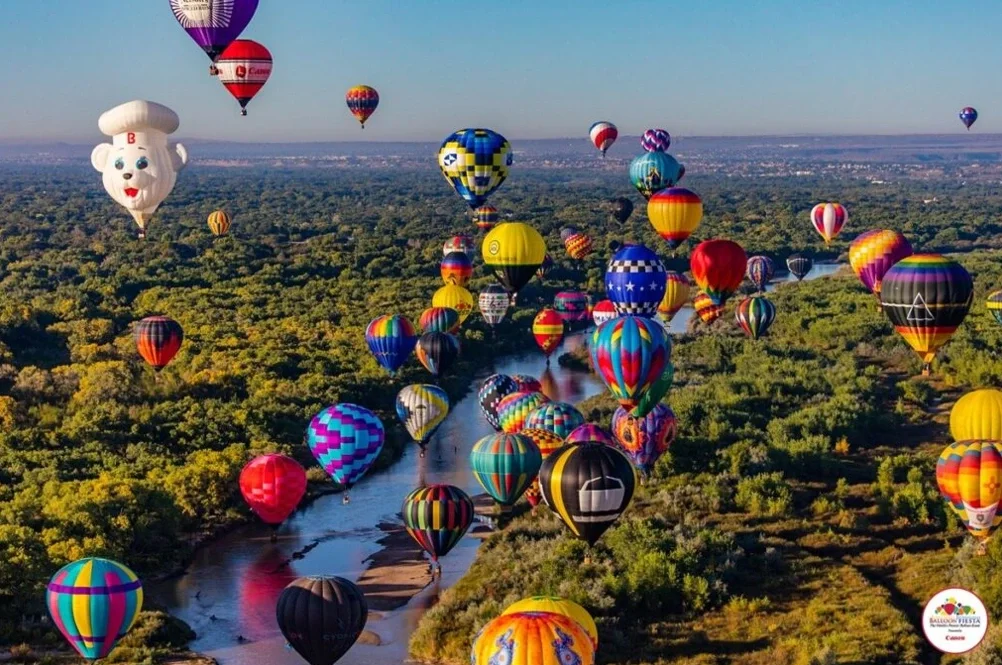
The largest and oldest balloon festival in the world has been taking place in Albuquerque, New Mexico (USA) since 1972.
In 1972, the festival had only 13 balloons. Currently, over 500 balloons participate in the festival every year!
Let’s repeat it for those who didn’t understand: 500 balloons!
5. own balloon race
In 2010, two American adventurers and friends, Kent Couch and John Freis, organized a unique type of competition – they wanted to see who could fly the farthest. The uniqueness of the flight was that they did not fly in regular balloons, but in chairs to which many smaller helium-filled balloons were attached.
During their experimental flights, both soared to an altitude of over 17 000 feet (over 5 km!) and had to use oxygen masks. John won the ‘race’, landing after 73 miles (almost 116 km), while Kent landed 3 miles earlier.